Mmos World
The Intersection of Accessibility and Complexity in Modern MMORPGs
Understanding how MMORPGs juggle complexity with accessibility helps players choose games that suit their style and advocate for better design. This article is NOT for those seeking basic game reviews or introductions to MMORPGs.
Common Mistakes When Judging MMORPG Accessibility
Most players rush to dismiss MMORPGs with accessibility features as “too simple,” missing how these features often coexist with deep mechanics. Another frequent error is assuming complexity equals difficulty, which may discourage casual players prematurely. Additionally, some gamers overlook how poorly implemented accessibility can complicate gameplay further, turning intended aids into barriers.
Beyond these, players often mistake the presence of accessibility options as a sign that the game lacks challenge altogether, which is not always the case. Some assume that accessible MMORPGs reduce player agency by automating core decisions, when in reality many offer optional assistance that can be toggled on or off. Others fail to recognise that accessibility features can improve the experience for all players, not just those with specific needs, by enhancing comfort, reducing fatigue, or improving clarity.
Another common pitfall is ignoring the importance of community and social accessibility. Even the most mechanically accessible MMORPG can become frustrating if social systems, communication tools, or group content do not accommodate diverse player needs. This oversight may lead to undervaluing games that excel in these areas simply because their mechanical complexity is less apparent.
These mistakes can lead to missed opportunities for enjoyment and advocacy. Recognising that accessible design doesn’t always mean shallow gameplay is crucial, and a more nuanced approach helps players appreciate the layered experiences that many MMORPGs offer.
When Not to Prioritise Accessibility Features
This approach is NOT for you if you prefer games that demand immediate mastery without guidance or assistance. It also fails when the game’s core appeal is intense challenge with minimal hand-holding, as accessibility features may dilute that experience. In highly competitive MMORPGs, some players find accessibility options interfere with the sense of accomplishment.
Furthermore, if you value unpredictability and emergent difficulty as part of your gameplay, accessibility features designed to streamline or simplify certain actions might feel restrictive or diminish the thrill of overcoming obstacles unaided. Similarly, players who enjoy games that reward memorisation and reflexes without aids may find these features detract from their preferred experience.
Accessibility may also be less desirable if you participate in speedrunning or competitive ranking systems where any form of assistive technology is considered unfair or banned. In these contexts, prioritising accessibility could even limit your ability to engage fully with the community or events.
Before-You-Start Checklist for Choosing MMORPGs Balancing Complexity and Accessibility
- ☐ Evaluate if the game offers adjustable difficulty or scalable mechanics.
- ☐ Check if accessibility options include UI customisation, control remapping, and assistive features.
- ☐ Consider whether community feedback reflects inclusive design without sacrificing depth.
- ☐ Look for developer transparency about design trade-offs between accessibility and complexity.
- ☐ Test early gameplay to see if accessibility features enhance rather than restrict your preferred style.
- ☐ Explore whether the game supports varied input devices, such as controllers, keyboard and mouse, or specialised hardware.
- ☐ Assess the clarity and readability of in-game information, including subtitles, colour contrast, and font sizes.
- ☐ Investigate the availability of tutorials, tooltips, and learning aids that can be toggled based on player preference.
- ☐ Review how social features accommodate players with communication challenges or those who prefer solo play.
- ☐ Confirm if the game allows customisation of difficulty in group content to balance mixed skill levels.
Trade-Offs in Designing Accessible Yet Complex MMORPGs
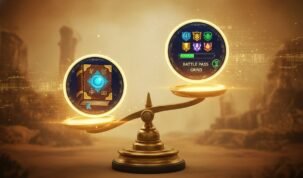
Designers face several trade-offs when balancing accessibility and complexity. First, simplifying interfaces can reduce immediate overwhelm but might obscure advanced tactics, challenging hardcore players. For instance, auto-targeting or simplified resource management may ease newcomers’ experience but limit the depth that veterans expect.
Second, extensive accessibility features require development resources that could otherwise expand content or polish complex systems. Allocating time and budget to implement diverse options such as screen reader support, colour-blind modes, or alternative control schemes can delay other gameplay improvements or limit scope.
Third, tailoring difficulty to accommodate various skill levels sometimes leads to uneven multiplayer experiences, where casual and hardcore players struggle to find common ground. Balancing raids, PvP, or cooperative challenges to be accessible yet rewarding is a persistent design challenge that can cause friction among player groups.
Additionally, some accessibility implementations may unintentionally create new barriers. For example, adding too many optional aids can clutter the user interface, confuse players, or create inconsistent gameplay experiences if some players use assists while others do not.
Understanding these trade-offs helps players set realistic expectations and appreciate the challenges developers face. It also encourages constructive feedback that supports the ongoing refinement of both accessibility and complexity in MMORPGs.
How to Choose Between MMORPGs With Varied Accessibility and Complexity
When deciding, consider your gameplay goals: Do you prioritise immersion with accessible controls, or do you seek intricate mechanics demanding time investment? Test if the game’s accessibility features complement your skill level without sacrificing the depth you enjoy. Review community discussions to gauge if the balance feels authentic or forced. Ultimately, choosing a game that respects both accessibility and complexity enhances long-term satisfaction.
In practice, the best MMORPGs manage to offer layered experiences where newcomers find entry points, and veterans uncover depth over time. Being mindful of common misconceptions and trade-offs equips you to make informed decisions and advocate for improvements in the genre.
This content is based on publicly available information, general industry patterns, and editorial analysis. It is intended for informational purposes and does not replace professional or local advice.
FAQ
Should I prioritise accessibility features over game complexity in MMORPGs?
It depends on your playstyle. If you prefer gradual learning and inclusivity, accessibility features enhance your experience. For those seeking deep, challenging mechanics immediately, complexity may take precedence.