Mmos World
The Rise of Metaverse Integration in Future MMORPG Worlds
Understanding when and how to integrate metaverse tech can save developers and players from costly community and economic issues. This article is not for casual gamers uninterested in MMORPG design evolution.
Common Mistakes in Metaverse Integration for MMORPGs
Most developers assume that simply layering metaverse elements onto existing MMORPG frameworks enhances player engagement, but this often leads to fragmented social groups and economic imbalances. Beyond these general pitfalls, there are several more specific mistakes that can undermine the success of metaverse integration:
- Overcomplicating Social Structures: Introducing metaverse social hubs without clear moderation or incentives can dilute meaningful player interactions, causing communities to splinter rather than unify. Excessive complexity in social features-such as multiple overlapping chat channels, ambiguous friend systems, or poorly defined group mechanics-can confuse players and reduce the sense of belonging.
- Ignoring Economic Stability: Rapid introduction of virtual assets and currencies tied to metaverse systems may destabilise in-game economies, leading to inflation or deflation that frustrates players and deters investment. Additionally, failing to balance asset scarcity and utility can result in market crashes or monopolies that spoil fair play.
- Underestimating Technical Overheads: Implementing metaverse features often demands significant backend support; failing to allocate adequate resources can result in lag, downtime, or broken features that disrupt gameplay. Overlooking server capacity planning, data synchronisation challenges, or network security vulnerabilities can exacerbate these issues.
- Neglecting User Experience Design: Metaverse elements that are poorly integrated with existing gameplay loops or user interfaces can feel tacked on and jarring. This disconnect may alienate players who prefer smooth, intuitive experiences over fragmented or complex interactions.
- Failing to Address Privacy and Safety: Metaverse environments often expose players to new forms of social interaction, raising risks related to harassment, data privacy, and identity theft. Without robust safety tools and clear policies, player trust can erode quickly.
When Not to Use Metaverse Integration in MMORPGs
There are scenarios where pursuing metaverse integration may do more harm than good. Beyond the obvious cases, additional situations warrant caution:
- If your MMORPG has a tightly knit, niche community: Introducing broad metaverse social layers risks alienating established players who value intimate, focused interactions over expansive virtual environments. This can lead to fragmentation or loss of core community identity.
- If your development resources are limited: Metaverse features require ongoing maintenance and optimisation; without sufficient budget or technical expertise, projects may suffer from persistent bugs or scalability issues. This can degrade player experience and damage the game’s reputation.
- If your game’s design philosophy emphasises linear progression: Games centred around narrative or structured content may find metaverse elements disruptive or out of place, diminishing immersion and pacing.
- If your player base expresses resistance or indifference: Introducing metaverse features without player buy-in risks wasted investment and community backlash, especially if players perceive changes as gimmicks rather than enhancements.
- If legal or regulatory compliance is uncertain: Metaverse features often involve virtual currencies and digital assets that can trigger complex legal frameworks. Without clear compliance paths, developers may face unforeseen liabilities.
Before-You-Start Checklist for Metaverse Integration
Before committing to metaverse elements in your MMORPG, ensure you have addressed the following:
- ☐ Have you mapped existing social interaction bottlenecks that metaverse tools aim to resolve?
- ☐ Are your in-game economies robust enough to handle new virtual assets without destabilising?
- ☐ Do you have a clear moderation and governance plan for expanded social spaces?
- ☐ Is your technical infrastructure scalable to support increased data demands and concurrent users?
- ☐ Have you engaged with your player base to understand their openness to metaverse features?
- ☐ Are your privacy, safety, and security policies updated to cover new interaction models?
- ☐ Have you assessed the legal and regulatory implications of virtual currencies or digital asset trading?
- ☐ Is your user experience design aligned with existing gameplay to ensure seamless integration?
- ☐ Do you have plans for continuous content updates and feature optimisations post-launch?
Trade-Offs of Metaverse Integration in MMORPGs
Integrating metaverse elements offers exciting possibilities but comes with trade-offs that need careful consideration. These trade-offs extend beyond the obvious pros and cons:
- Pros: Enhanced player immersion through richer avatars and environments, novel social experiences including larger and more diverse player gatherings, and diversified economic opportunities such as player-driven marketplaces and asset ownership.
- Cons: Increased complexity in social governance requiring more extensive moderation teams and tools, risk of economic imbalance that can alienate casual players or encourage exploitative behaviours, and higher technical demands that may necessitate infrastructure upgrades and specialised developer skills.
- Hidden Costs: Continuous content updates to prevent stagnation, security measures to protect against fraud and hacking, and ongoing player support to manage new social dynamics. Additionally, the need for frequent policy reviews to adapt to evolving community standards and regulatory environments can strain resources.
- Potential Impact on Game Identity: Introducing metaverse features may shift the core experience of the MMORPG, potentially alienating long-term players if the changes dilute the original vision or create conflicting gameplay styles.
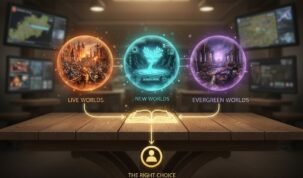
How to Choose Between Metaverse Integration Approaches
Deciding on the extent and style of metaverse features requires balancing ambition with practical constraints. Smaller-scale social hubs may suit projects prioritising community cohesion, while comprehensive virtual marketplaces benefit MMORPGs with stable, flexible economies and robust infrastructure. Always prioritise player feedback and technical readiness over novelty. Consider phased rollouts with pilot features to gather data and adjust plans accordingly, ensuring that metaverse expansions complement rather than disrupt the core game experience.
This content is based on publicly available information, general industry patterns, and editorial analysis. It is intended for informational purposes and does not replace professional or local advice.
FAQ
When should an MMORPG developer avoid adding metaverse features?
Avoid metaverse features if your game has a small, close-knit community resistant to change, or if you lack the technical capacity to maintain complex social and economic systems. Additionally, if your game’s design is narrative-focused or your player feedback is negative towards such expansions, it is prudent to reconsider. Legal and regulatory uncertainties around virtual currencies may also necessitate caution.