Mmos World
MMORPG Showdown: Which PC MMO Delivers the Strongest Endgame?
This short guide helps you pick by playstyle, expected time-to-reward, grind level and longevity signals. Not for players who want a casual taste of many MMOs rather than a single long-term home.
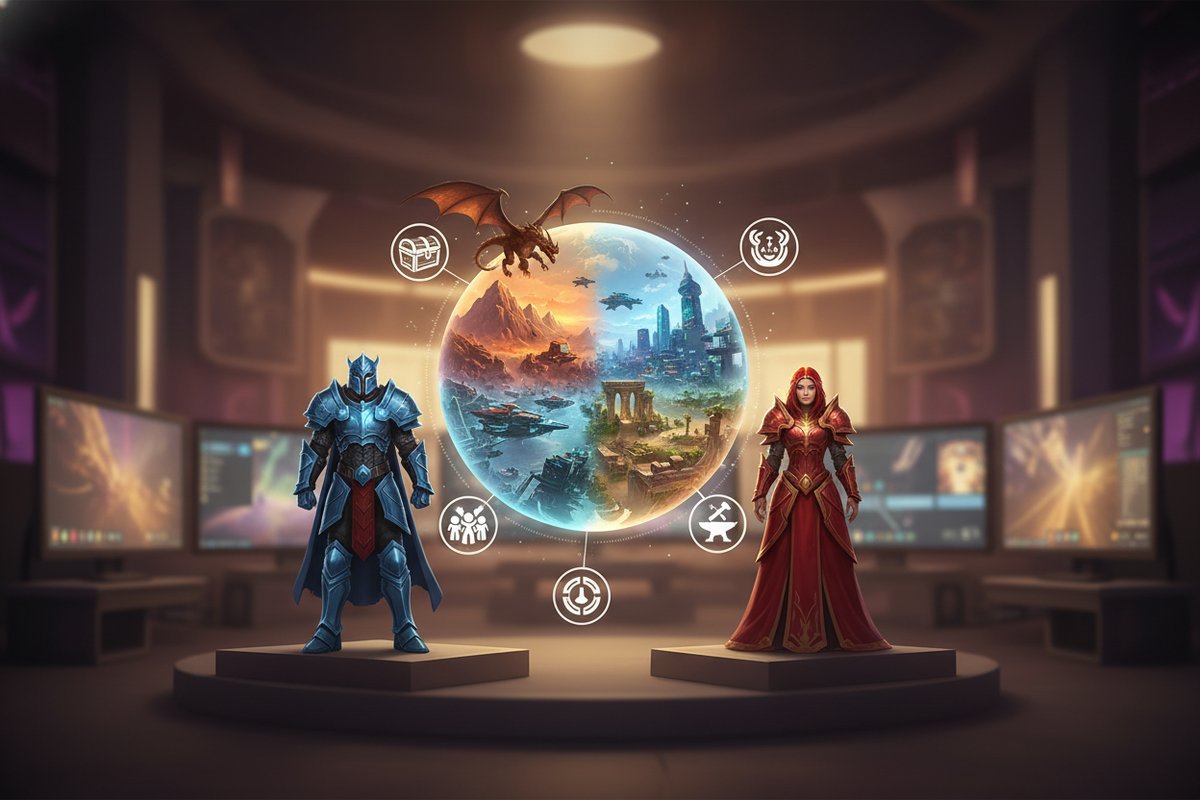
The real question is whether you want mythic raid prestige, ranked PvP laddering, or low-pressure solo progression before you commit hundreds of hours. Pick the wrong endgame and you either burn out fast or never reach the content you wanted.
Decision matrix – what this guide does for you
Below I compare three endgame goals-hardcore raiding, competitive PvP, and solo/casual progression-across the signals that matter when choosing a single primary PC MMO: update cadence, community activity, time-to-reward, grind intensity, and reward quality.
Where possible I use recent coverage and community signals rather than marketing claims: a general list of top MMOs provides broad context (PCGamesN), ESO’s live-update behaviour is documented in recent guides (LootAndGrind), and community sentiment or tiering helps frame popularity dynamics (YouTube tier list).
Hardcore raiding: what to expect and the best fits
Best for players who can commit fixed weekly windows and enjoy tight coordination, strategy, and incremental gear progression. Not for players who only have unpredictable playtimes.
What ‘strong endgame’ looks like here: regular raid tiers that introduce fresh boss encounters and tuned gear ladders, plus a community of guilds running coordinated schedules. Historically, a few long-running MMOs remain the default choices for serious raiders; background on the genre’s evolution is useful context (Gamespot).
Time-to-reward: you should expect a period of weeks-to-months of coordinated attempts before reaching personal progression goals (e.g. downing key bosses or earning top-tier pieces).
Grind level and required structure: high. Progression depends on raid practice, optimised builds, and adherence to schedules. Reward quality: prestige, unique cosmetics, and incremental power that matters in raid tiers.
Signals to look for: steady raid-tier cadence, active raid guild recruitment, and patch notes that maintain endgame balance. Recent community discussions and developer teases can indicate ongoing support (MassivelyOP).
Competitive PvP: what to expect and the best fits
Best for players who thrive on short-session intensity, ladder climbing, and meta adaptations. Not for players who dislike repeated near-equal-match losses or lengthy skill curves.
What ‘strong endgame’ looks like here: robust ranked systems, regular balance patches to keep the meta shifting, well-populated PvP zones or arenas, and meaningful cosmetic or ranking rewards for high placement.
Time-to-reward: noticeable improvement or tangible ladder progress often comes in weeks of focused play, but becoming top-tier competitive can take months of practice paired with frequent sessions.
Grind level and structure: medium to high. Skill and time investment matter more than raw gear in many PvP-focused MMOs, though some titles mix PvE gear into PvP power. ESO’s campaign-style structure and repeat events are examples of an MMO that supports varied play patterns (LootAndGrind).
Signals to look for: active ranked ladders, transparent balance patch notes, and community-run tournaments or seasonal systems that reward placement.
Solo / casual progression: what to expect and the best fits
Best for players with limited or variable playtimes who want reliable progression and meaningful rewards without heavy group requirements. Not for players who want raid-level coordination or high-stakes ladder play.
What ‘strong endgame’ looks like here: repeatable solo activities that scale with time investment, meaningful goals (housing, collections, achievements), and developer support for content that doesn’t require a fixed team. Several of the MMOs often listed among top options cater well to solo progression (PCGamesN).
Time-to-reward: steady gains in days-to-weeks per goal (e.g. reaching a gear bracket or finishing a solo raid equivalent), with lower pressure to be optimised. Grind level: low-to-medium depending on whether you pursue cosmetic or power goals. Reward quality: reliable personal progression, collectibles, and solo-focused achievement sets.
Quick practical comparisons (playstyle decisions)
- Hardcore raider: favour MMOs with active raid tiers and visible guild recruitment. Expect scheduled runs, replaying boss mechanics, and performance tuning.
- Competitive PvPer: seek titles with clear ranked systems and frequent balance updates so the meta remains meaningful over time.
- Solo/casual grinder: choose MMOs that support asynchronous progression and meaningful solo goals-these usually provide longevity without tight scheduling.
Before-you-start checklist
- ☐ Can you commit to fixed weekly sessions? If yes, raid-focused games are viable.
- ☐ Do you prefer short, intense sessions or long coordinated runs? Short sessions favour PvP and solo systems.
- ☐ Have you checked recent developer activity and patch cadence for your target MMO? Use community news roundups and patch notes as a quick filter (MassivelyOP weeklies).
- ☐ Is the game’s community healthy for your goal (active guilds for raids, populated arenas for PvP, solo economy for grinders)? Look at forum recruitment, third-party sites, and content creators.
- ☐ Are you prepared for the expected grind tempo-weeks of practice for raid bosses or repeated sessions for ladder climbing?
Common mistakes players make (and the real consequences)
Most people pick an MMO based on short-term fun rather than endgame fit. Consequence: they run out of long-term goals and bounce between games.
Another common mistake is assuming a large playerbase equals a healthy endgame for your playstyle. Consequence: big populations can still cluster around a few activities, leaving your preferred mode sparse.
A third mistake is ignoring update cadence and developer signals. Consequence: you may commit to a grind only to see the developer pivot priorities, leaving your chosen endgame unsupported.
Trade-offs you should consider
1) Time vs prestige: committing to raid-focused content buys you prestige and unique rewards, but costs predictable weekly hours that you might not have. You sacrifice flexibility for high-end reward.
2) Skill vs gear: competitive PvP often emphasises skill and short sessions, which can feel fairer but demands personal improvement over time. You gain fast-session excitement but sacrifice instant power gains from gear-based systems.
3) Flexibility vs novelty: solo/casual progression grants flexibility and steady gains, but endgame novelty can be slower. You keep the option to dip in and out, but may miss the social highs of raids or tournaments.
When not to use this decision approach
This guide is NOT for players who want to rotate many MMOs in a year. If you prefer sampling multiple endgames rather than investing in one, choose a short-term focus instead.
Also, if you are motivated primarily by social friends rather than playstyle, let their choice guide you-this matrix is playstyle-first and may mismatch an established friend’s group.
Final decision guide: Choose by exact playstyle
Choose a raid-focused MMO if you can commit recurring, calendar-based time and value high difficulty, coordinated strategy, and prestige rewards. Look for active raid recruitment and steady tier updates in community coverage (Gamespot).
Choose a PvP-focused MMO if you prefer short-session intensity, visible ladders or arenas, and skill-based progression. Verify the game publishes balance notes regularly and has an active ladder or tournament ecosystem; community tierings provide useful sentiment context (community tier list).
Choose a solo/casual-focused MMO if your schedule is irregular and you want reliable personal progression without guild dependencies. Games noted for accessible progression and live events can be found in mainstream roundups (PCGamesN) and genre guides (LootAndGrind).
Practical next steps
1) Pick one playstyle from this guide and run the Before-you-start checklist for a shortlisted MMO.
2) Spend a trial month focused on one endgame: attend a raid night once a week, queue for ranked sessions, or pursue a solo goal. Observe whether progress and community match expectations.
3) Reassess at the month mark: if the time-to-reward and community support match your expectations, deepen commitment; if not, switch playstyle or title rather than splitting effort across multiple games.
This content is based on publicly available information, general industry patterns, and editorial analysis. It is intended for informational purposes and does not replace professional or local advice.
FAQ
What if I enjoy multiple playstyles—should I commit to one MMO?
If you enjoy multiple endgames but must pick one primary home, prioritise the playstyle that matches your weekly availability. Use a one-month focused trial on a single mode (raid nights, ranked sessions, or solo goals) to test longevity before splitting time across games.
How do I check if an MMO’s community supports my chosen endgame?
Look for active recruitment (guild forums, Discord), frequent balance or raid patch notes, and content creator activity around your mode. Community roundups and weekly news posts can signal ongoing support (MassivelyOP).