Mmos World
The Impact of Cloud Gaming on Future MMORPG Experiences
Understanding how cloud gaming affects latency, accessibility, and social interaction helps you decide when it enhances or hinders your MMORPG experience. This is not for players with unreliable internet or those prioritising ultra-responsive gameplay.
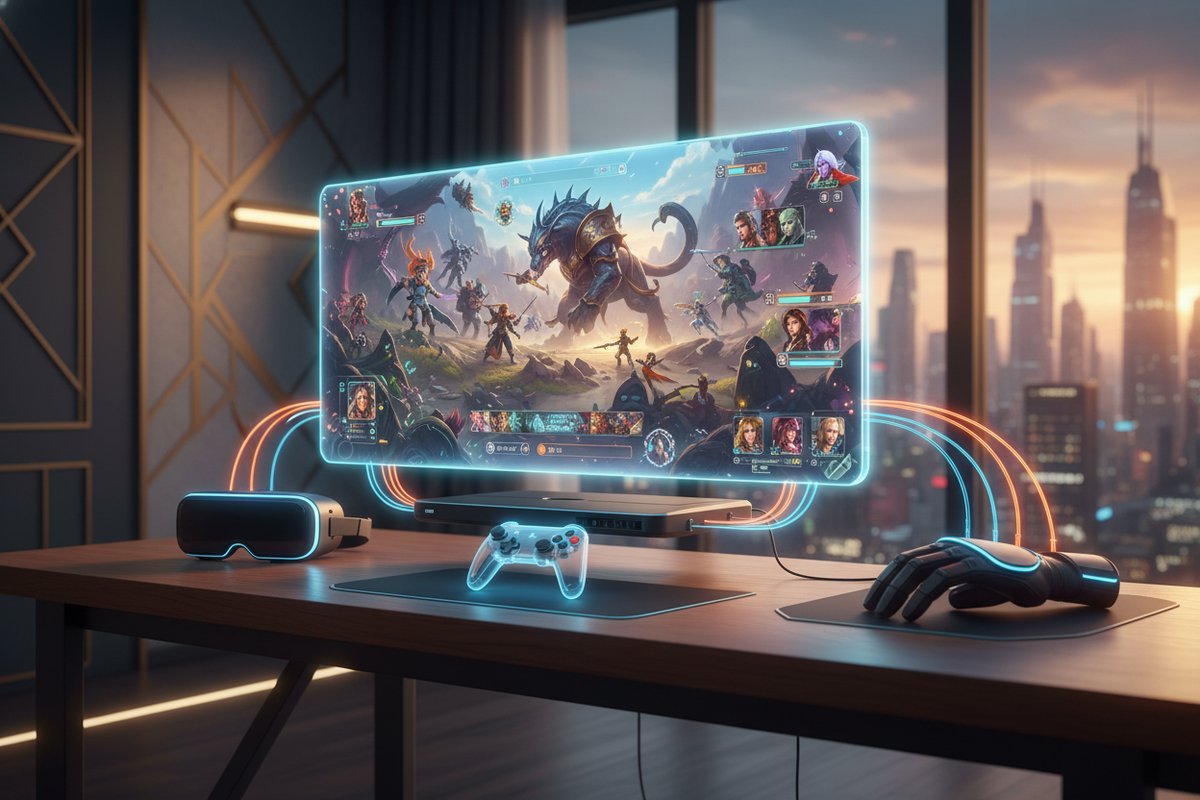
Common Mistakes MMORPG Players Make with Cloud Gaming
- Ignoring latency variability: Many players assume cloud gaming offers consistently low latency. In practice, latency can fluctuate due to server distance and connection quality, leading to delayed combat responses or awkward social interactions. This can be particularly problematic during high-stakes raids or player-versus-player (PvP) battles where timing is crucial.
- Overestimating accessibility gains: While cloud gaming removes hardware barriers, some overlook the need for stable, high-speed internet, which is not always available, potentially blocking access rather than enabling it. Users in rural or less-developed areas may find that poor internet infrastructure nullifies the intended convenience.
- Neglecting social feature limitations: A common error is expecting cloud platforms to fully replicate local client social systems. Voice chat delays or limited friend list integration can disrupt guild coordination and community bonding. Additionally, some cloud platforms do not support third-party communication apps effectively, isolating players from their regular social networks.
- Underestimating bandwidth consumption: Cloud gaming can consume large amounts of data, which may be an issue for players with limited data plans or metered connections. Excessive data use can lead to throttling or additional costs, reducing the appeal of cloud solutions.
- Ignoring input device compatibility: Some players assume all peripherals will work seamlessly with cloud gaming platforms. However, certain specialised gaming keyboards, mice with high polling rates, or custom controllers may experience lag or not be recognised, affecting gameplay accuracy and comfort.
- Failing to test peak hour performance: Internet performance can degrade during peak usage times. Players who only test cloud gaming during off-peak hours might be unprepared for lag spikes or quality drops during their typical gaming sessions.
- Assuming unlimited session lengths: Some cloud services impose session time limits or require periodic reconnection, which can interrupt extended gaming sessions common in MMORPGs, frustrating players engaged in lengthy quests or events.
When Not to Use Cloud Gaming for MMORPGs
- If your connection is unstable or capped: Cloud gaming relies heavily on consistent internet quality. In cases of frequent drops or bandwidth limits, gameplay suffers significantly, making traditional client installs preferable.
- If you require precise input timing: Competitive or fast-paced MMORPG elements may not perform well due to inherent network lag, so those prioritising twitch reactions might find cloud gaming frustrating.
- If you have limited data allowances: Players with data caps should avoid cloud gaming for MMORPGs since streaming can rapidly consume available bandwidth, leading to unexpected costs or throttled speeds.
- If you play in regions with poor server availability: When cloud servers are not optimally located near your region, latency spikes become unavoidable, degrading gameplay quality and causing frustration.
- If you rely heavily on third-party mods or customisations: Many cloud platforms restrict or do not support the installation of mods, add-ons, or custom UI elements, which can be a dealbreaker for players who depend on these enhancements.
- If your MMORPG requires frequent offline play: Cloud gaming depends on an active internet connection at all times. In situations where you want to play without connectivity, local installs remain necessary.
- If you prefer fully local control and data privacy: Cloud gaming entrusts your gameplay data and inputs to external servers, which may concern privacy-conscious players or those with strict data control preferences.
Before-You-Start Checklist for Cloud-Based MMORPG Gaming
- ☐ Test your internet speed and consistency at times you usually play.
- ☐ Check if the MMORPG supports full social features on the cloud platform.
- ☐ Confirm your input devices (keyboard, mouse, controller) are compatible and supported.
- ☐ Look for options to adjust streaming quality to balance visuals and performance.
- ☐ Review community feedback on cloud performance for your chosen MMORPG.
- ☐ Verify if the cloud service allows the use of voice communication tools you prefer.
- ☐ Ensure your data plan can handle the expected bandwidth usage without penalties.
- ☐ Confirm if there are any session time limits or mandatory reconnection requirements.
- ☐ Test gameplay during your normal gaming hours, including peak internet usage times.
- ☐ Check for any restrictions on installing or using third-party mods or custom content.
Trade-Offs When Choosing Cloud Gaming for MMORPGs
- Latency vs Hardware Freedom: You gain access without high-end gear but may sacrifice responsiveness, especially in action-heavy encounters. Even a slight input delay can impact your ability to execute complex skill rotations or dodge attacks, which is less of a concern when playing locally.
- Accessibility vs Connection Dependence: Easier access from multiple devices contrasts with the risk of interrupted sessions when internet falters. While cloud gaming allows playing on devices that otherwise couldn’t run the game, it also ties your experience directly to internet quality, making outages or slowdowns more disruptive.
- Social Experience vs Platform Limitations: While cloud gaming can broaden your player base, certain social tools may be less robust, impacting group play and guild activities. Limitations in voice chat, friend lists, and community integration may cause coordination problems in group content or diminish the immersive social atmosphere MMORPGs rely on.
- Data Usage vs Cost Efficiency: Cloud gaming consumes significant data, which can be costly or problematic for users with data caps or limited broadband plans. Local gaming, once installed, has minimal ongoing data requirements beyond initial updates.
- Convenience vs Customisation: Cloud platforms simplify setup and maintenance but often restrict the ability to tweak game files, use mods, or adjust performance settings extensively, potentially limiting the player’s preferred playstyle or experience.
- Instant Updates vs Control Over Patches: Cloud gaming services often apply updates automatically, which can be a benefit for staying current but may also remove player control over when to install patches. This can disrupt gameplay if a new update introduces bugs or removes favourite features temporarily.
How to Choose Between Cloud and Traditional MMORPG Play
Consider your internet reliability, the importance of input precision, and how vital social features are to your enjoyment. If your setup aligns with stable, fast connections and you favour convenience over ultra-low latency, cloud gaming can offer a compelling way to explore MMORPGs. It enables play on a wider range of devices and removes the need for costly hardware upgrades. However, if you engage in competitive or timing-critical content, or rely on extensive social interactions and custom content, traditional installations remain the safer bet for serious or competitive players.
In summary, cloud gaming introduces meaningful shifts in MMORPG experiences but demands careful evaluation of your circumstances to avoid common pitfalls. Balancing the trade-offs between accessibility and performance, social integration and platform limitations, as well as data consumption and cost, will help you make an informed choice tailored to your gaming priorities.
This content is based on publicly available information, general industry patterns, and editorial analysis. It is intended for informational purposes and does not replace professional or local advice.
FAQ
Should I switch to cloud gaming for my MMORPG if I have a moderate internet connection?
If your internet is stable and reasonably fast, cloud gaming can work, but if connectivity fluctuates, you may experience lag or disconnections affecting gameplay quality.
Can I use my favourite mods and custom add-ons with cloud gaming?
Many cloud gaming platforms restrict the use of third-party mods or custom content, so if you rely heavily on these, traditional installations may be better suited to your needs.
Will cloud gaming affect my ability to communicate with my guild or friends?
Cloud platforms often have limited social features compared to local clients, including delays in voice chat or restrictions on friend lists, which can impact communication during group activities.
Is cloud gaming suitable for competitive PvP in MMORPGs?
Due to variable latency and potential input lag, cloud gaming might not be ideal for highly competitive or timing-sensitive PvP scenarios where every millisecond counts.
How can I minimise data usage when cloud gaming?
Adjust streaming quality settings to balance visual fidelity and bandwidth consumption, and monitor your data plan to avoid unexpected charges or throttling.